




58 ways to crush your Shopify & eCommerce competition 🤖
Actionable strategies to turn visitors into customers and blow your competitors out of the water. ...






Search ‘how to write product descriptions’ on Google and you’ll find a bunch of advice.
The problem? Most of it sucks.
To save you the time and hassle of reading bad advice, We’ve written this post with useful, actionable tips for writing product descriptions that lead to sales.
If this blog post has felt unusually quick to get to the point and easy to digest, here’s why:
Amazon spends billions fine-tuning every aspect of their selling experience. Their goal is to make as much money as possible by maximising engagement and conversions.
Studying how they present products is instructive in doing it effectively yourself.
Take this dog lead as an example:
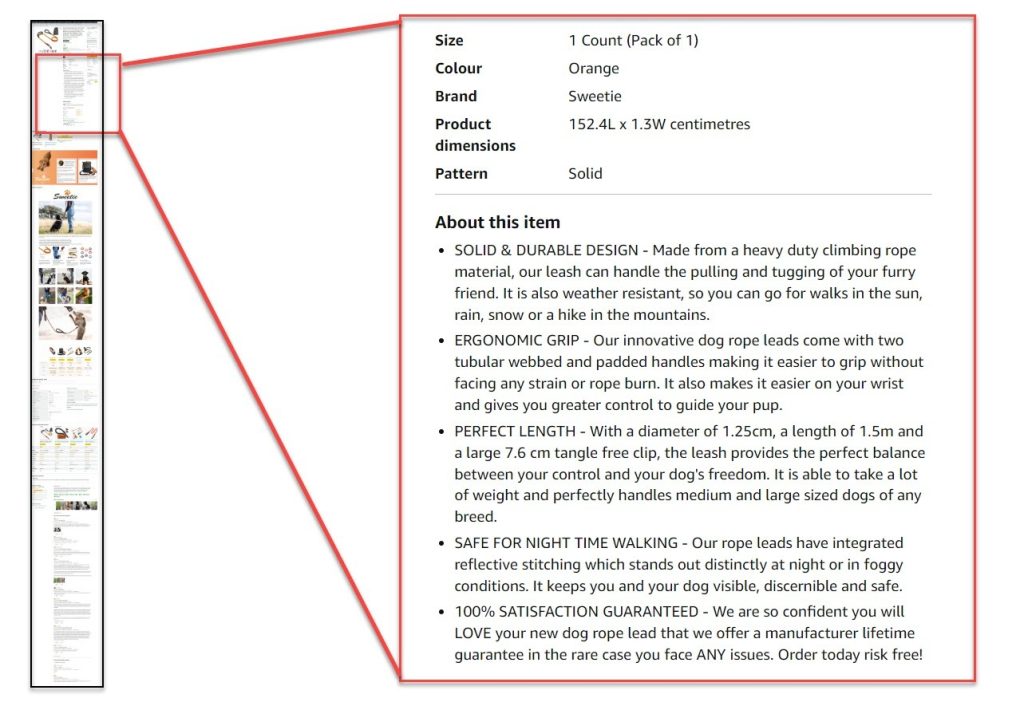
The full product page (on the left) has tons of sections giving granular information about every aspect of the product.
But the most important info – the stuff that’ll be enough to convince the vast majority of customers to buy – takes up less than 20%.
If we ignore the trust signals (reviews, units sold, return policy, discounts etc) and focus only on the descriptive content, here’s what’s included:
Combined, this is about 230 words. And the pattern holds true across all sorts of products: dog food, cat toys, reptile cages, hamster bedding, and so on.
The reason why is simple: this information will satisfy the vast majority of user intent. In other words: after skimming this stuff, most people will decide whether or not to buy.
And for those who don’t reach that decision, let’s look further down the Amazon page:
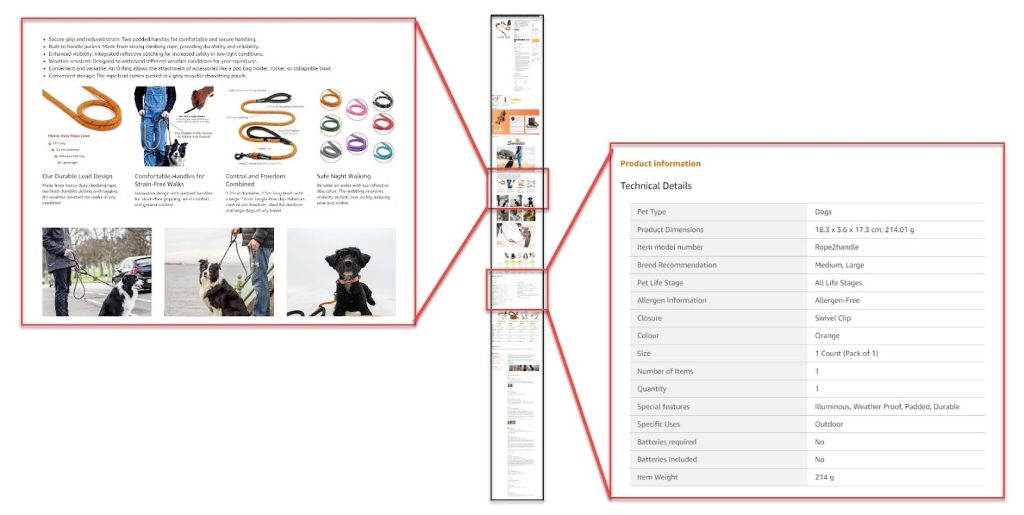
What we’re looking at is tons of supplementary info, pretty visual content, technical details, and additional info. All of which is designed to do two things:
When building product pages on your site, this is where you can include information about the product’s history, more detail around the functionality, technical points that will appeal to a minority of users, and so on.
Then right at the bottom of the page we have user reviews: as well as being strong trust signals, these give even more descriptive info about your products.
Following the split between key info and supplementary info mentioned above, consider this part of the post to be supplementary info: it’ll be really useful to a smaller percentage of readers.
If you got this far, read on for recommendations to really strengthen your product descriptions.
Our first piece of advice in this article was to BE RELEVANT, which implies a need to understand your audience. Knowing who they are and what they’re looking to do lets you:
Pitching your product descriptions correctly will have a huge impact on your site’s ability to convert prospects into customers.
It goes without saying you should include images on your product pages. But visuals can help elsewhere, too. For instance: when choosing a product colour, which is easier?
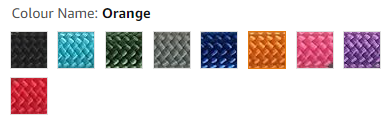
Our third piece of advice was to MINIMISE AMBIGUITY: colour names are ambiguous, as there are tons of shades. Even naming shades can be ambiguous: what does ‘nautical’ mean in ‘nautical navy blue’?
This is one of many examples of how visuals can cut through complexity and make your product descriptions easier to engage with.
Outsourcing elements of your ecommerce store is a great way to free up time and get things moving more quickly. Just be aware: product descriptions written by people with no real-life experience of a product are much less effective.
Performance of product pages should be measured over time so that their effectiveness can be measured and improvements made. Here are several key metrics for evaluating product descriptions:
Product pages, including product descriptions, should be refined over time to maximise their value. With data collection and analysis in place you can evaluate the impact of changes.
We recommend A/B testing, i.e. conducting experiments with different product descriptions to see which elements perform best.
Customer interaction should be an integral factor of what goes into your product descriptions. If prospective customers keep asking you the same question, update your product description to include it.
We’ve seen this time and again: people asking online about some feature of a product, and zero information about it on the product page.
Breaking from the ‘study Amazon and replicate how they do it’ advice above, putting supplementary information in tabs is a good way to make the product page as a whole less daunting and easier to skim.
Some closing thoughts on what not to do, courtesy of questionable advice in some of the blog posts we read while researching this one:
Getting your ecommerce store up and running can be simpler than you think. If you’ve got an idea, or an existing website you want help with, we can help you turn that into a reality:

Actionable strategies to turn visitors into customers and blow your competitors out of the water. ...
What Oxfordshire businesses want in 2026, and how it compares to the hype
TL;DR probably not