




58 ways to crush your Shopify & eCommerce competition 🤖
Actionable strategies to turn visitors into customers and blow your competitors out of the water. ...






Actionable strategies to turn visitors into customers and blow your competitors out of the water.
Imagine two shops:
Which are you more likely to buy from? The first one, right?
It’s the same with online shopping: to turn visitors to your store into customers you need to hit as many notes as possible, creating a simple, inviting and pleasurable shopping experience.
This post covers 58 strategies for Shopify success:
🐸 This is a long list! The goal isn’t to use all the strategies right away: just remember that each one you use will make your site stronger.
Internet users are super impatient: if they can’t find what they’re looking for quickly they’ll go elsewhere.
A huge part of running a successful Shopify store is capturing the attention of your visitors and keeping hold of it while you guide them toward making a purchase.
These six strategies will help you do just that 👇
What you need to do: use striking visuals and engaging content right away on your website.
Why: attention-grabbing content creates a strong first impression and encourages users to dig deeper into your site.
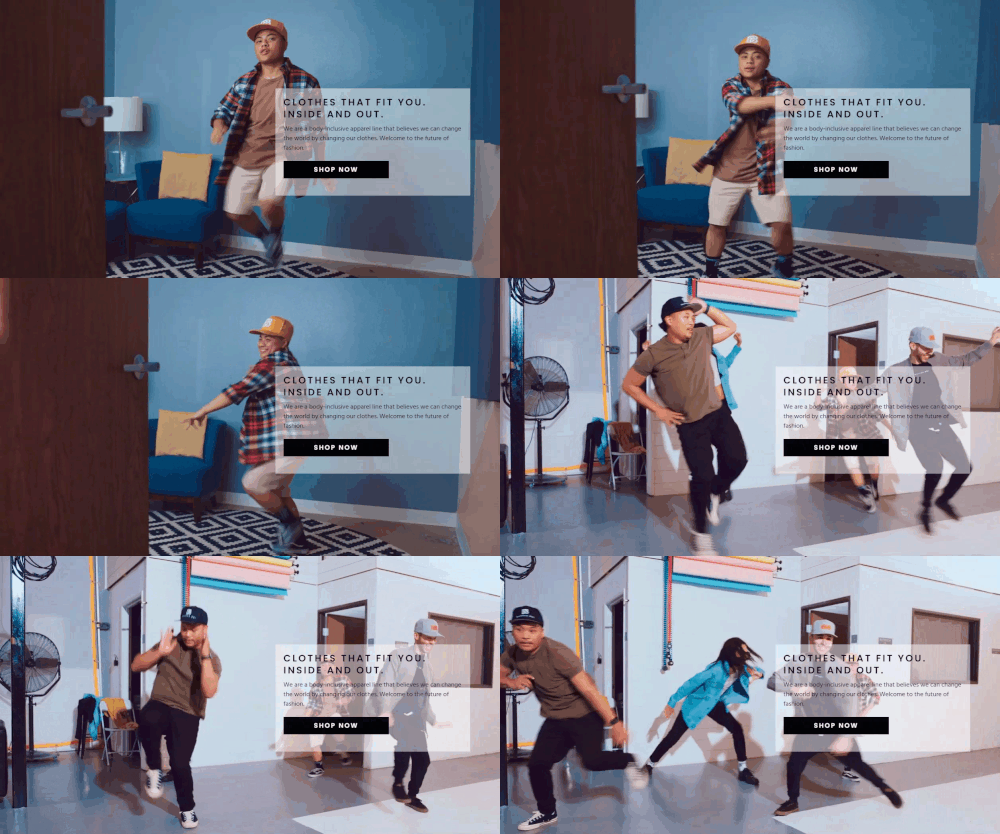
Dapper Boi showing us how it’s done
What you need to do: put your value proposition front and centre. Tell users what your brand is about, communicate the benefits of your products.
Why: this lets users know what to expect and gives them a clear idea of what they’ll find in your store. Ambiguity is an engagement killer: an unclear first impression may make people head elsewhere.
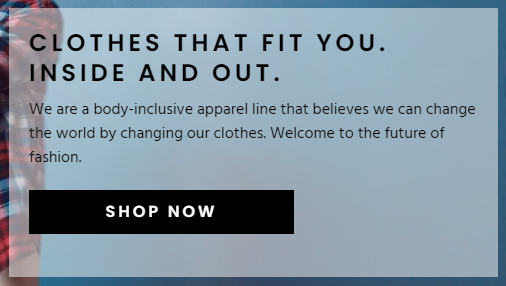
A close-up of the Dapper Boi value proposition
It might seem obvious but you’d be surprised how many online stores don’t do this.
What you need to do: create an intuitive, logical navigation structure on your site.
Why: once you’ve got a user’s attention, you want to make it as easy as possible for them to navigate through your store – ideally straight toward your product pages but also to informational content where required.
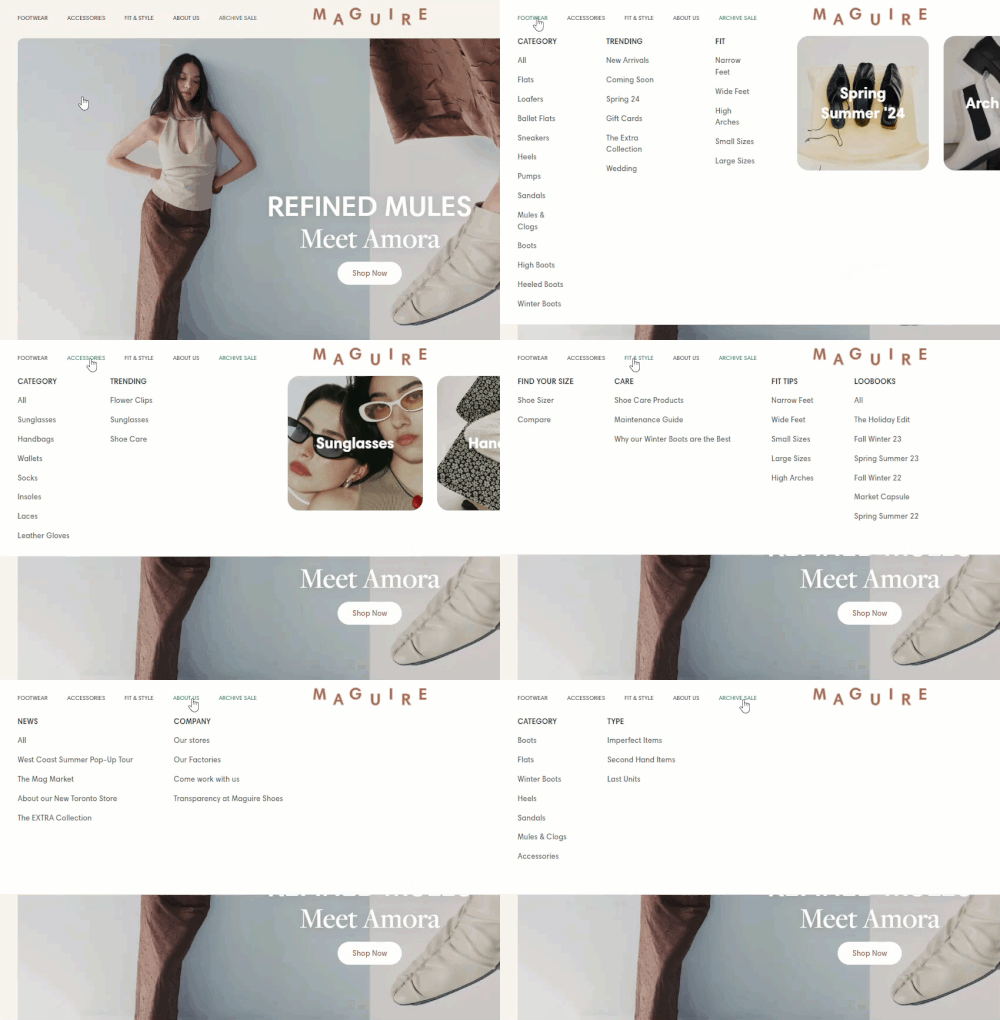
Maguire do a great job of this
What you need to do: include a search engine on your site.
Why: if users can’t find something quickly through your navigation, they’ll look for search as an alternative. And if it’s not there, guess what? They’ll go elsewhere.
What you need to do: make sure your site loads as quickly as possible on any device, with any connection.
Why: Internet users are impatient: if your store takes too long to load they’ll go elsewhere.
A slow site means you’ll be less visible in Google, too: the search engine has used site speed as a ranking factor for over a decade.
⚡ Get a free tech SEO audit of your ecommerce site.
What you need to do: make sure your site loads seamlessly on any device, whatever the screen size.
Why: just like slow load speed, users are more likely to jump ship if your site looks jumbled or is hard to navigate on their device.
Responsive design is a ranking factor, too: unresponsive sites lead to lower visibility in search engines, less traffic, and lower conversion rate.
You’ve caught their attention, now to guide your visitors toward making a purchase.
The theory is simple: give them what they need to make an informed decision that your product fits their needs.
The implementation is notoriously tricky, though. And with product presentation having the power to make or break a sale, here are 12 strategies for doing it right 👇
What you need to do: write comprehensive and accurate descriptions of your product, outlining everything that a prospective customer might find relevant.
Why: detailed product descriptions address the varying needs of visitors to your site, giving in-depth information and answering any potential questions people might have.
Product descriptions also communicate to search engines what your products are about, making it easier for your site to rank.
💰 Our comprehensive guide will help you write product descriptions that convert. Read it here.
What you need to do: use clear, high-resolution images that accurately and attractively portray your products
Why: shopping is a very visual process, especially online where there is no tactile connection to the product. Quality images show customers exactly what to expect, helping to build trust in your product and your brand.
Make sure your pictures cover as many angles as possible, that they’re well lit, and that they offer a high level of detail.

Clothing brand United by Blue do this well: all angles covered
What you need to do: implement AR to let customers see products in a real-life context or, even better, on themselves.
Why: visualising products gives prospective customers a far better understanding of how they will look on themselves or in their environment, correlating with a big uptick in conversion rate.
What you need to do: offer even more info about the benefits and features of your products through additional content
Why: as we explain in our product description primer, descriptions “will satisfy the vast majority of user intent … after skimming them, most people will decide whether or not to buy.”
But some prospective customers will want more info, usually about some granular aspect of your product that’s particularly important to them. Creating additional resources to target as wide a range of user needs as possible maximises your chance of converting prospects to customers.
What you need to do: give visitors the option to personalise their product directly through your website.
Why: people are more likely to buy a product when they feel it aligns exactly with their needs and preferences. Choosing product options – colour, material, etc – builds a feeling of ownership and generates buy-in.
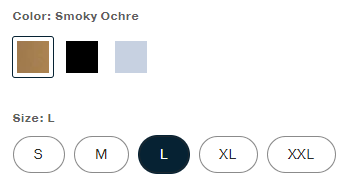
Let’s look again at United by Blue: basic but familiar product customisation
What you need to do: offer live demos or personal consultations via video calls or livestreams.
Why: to really showcase your products, nothing beats the human element. Getting an enthusiastic member of your team to promote your product strengthens trust and presents the opportunity for personalised advice – both great for boosting conversion.
Obviously this takes more time and effort than just selling through a product page, so consider offering it as an incentive to customers who sign up to your mailing list or give some other signal of intent to buy.
What you need to do: show related products to customers and suggest relevant upgrades at appropriate points in their journey.
Why: this is a great way to connect customers with other products they might be interested, improving their shopping experience and increasing average order value.
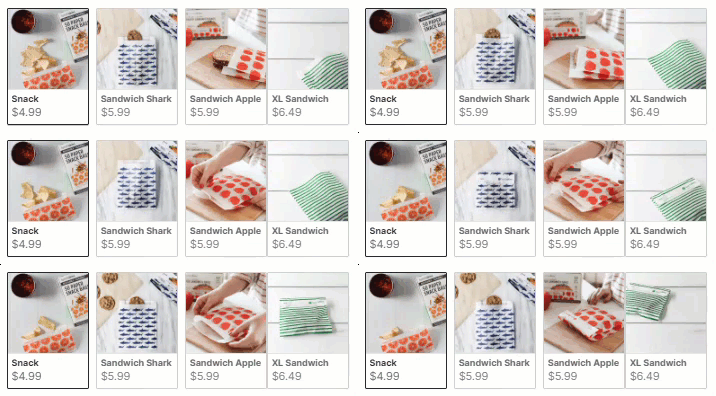
Lunchskins make it easy to buy the next size up
What you need to do: offer cross-sells or bundles so customers can buy combinations of products that meet their needs.
Why: bundling your products taps into a customer’s decision to buy by connecting them with other products that meet their needs. Offering these practical additions, potentially at a discounted price, increases customer satisfaction and average order value.
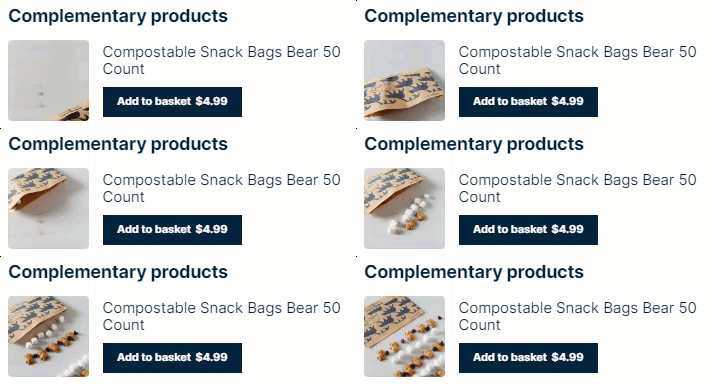
They make it easy to buy a related product, too
What you need to do: display ratings given by past customers to demonstrate the quality and popularity of your products.
Why: the majority of people who shop online evaluate ratings as part of their decision-making process, and it’s not just the number of stars: they’ll look at the star rating, the number of reviews, the ratio between the two, and subconsciously assess whether or not the outcome is satisfactory.

Shopify’s integrated ratings, modelled by the Tofino Soap Company
What you need to do: collect and showcase reviews from customers who’ve bought your products.
Why: the strongest trust signal for prospective customers is the opinion of existing customers. Seeing real-life testimonials will supplement the information you provide, helping your visitors towards making a buying decision.
What you need to do: let your visitors save a wishlist on your site that they can return to later.
Why: for prospects who aren’t quite ready to buy, you need to give them reasons to come back to your site. Letting them save products they’re interested for later makes it easier to return and complete the purchase at a later date.
You can also use the wishlist data to draw marketing insights: it’s a win-win.
What you need to do: show accurate product availability, including for each variant when customisation options are available.
Why: there’s nothing more frustrating than trying to order something online and finding it’s out of stock: it’s a waste of all the time you’ve spent browsing and deciding.
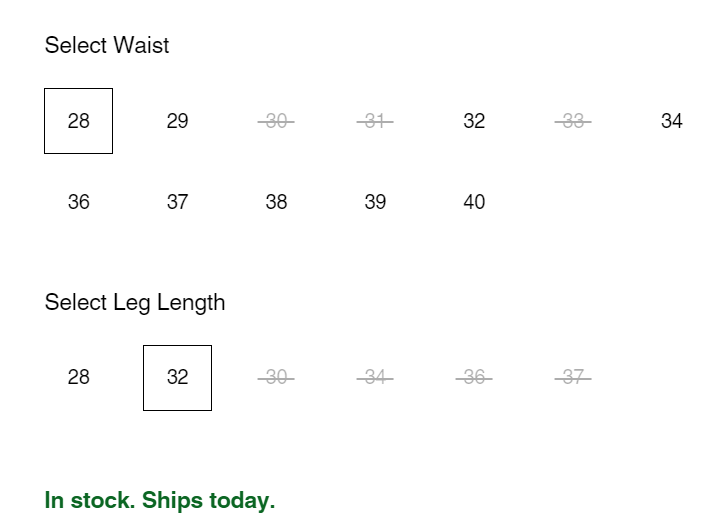
The Hiut Denim Co. make it very obvious what is and isn’t in stock
Setting accurate expectations around product stock levels prevents customer disappointment. And if you’re out of stock, give an estimate of when you’ll get more! (Also see strategy #44!)
Convincing a prospective customer to make a purchase is a huge achievement. Next up is making the checkout process as smooth and trustworthy as possible.
Because guess what? They will not hesitate to leave if things feel dodgy at any point.
What you need to do: simplify the checkout process as much as possible, use a clear design with minimal steps.
Why: every hurdle increases the chance that a prospective customer will jump ship or, in technical terms, abandon their cart.
By minimising opportunities for confusion and frustration you encourage a prospect toward making their purchase, while creating a positive brand experience.
What you need to do: give prospects the chance to purchase without creating an account.
Why: not everyone wants to sign up for an account, and it’s better to accommodate than alienate them. Offering a hassle-free guest checkout lowers the barrier for first-time customers and speeds up the checkout process.
This isn’t to say you can’t offer incentives for signing up: see strategy #41 for more info.
What you need to do: let customers pay with the payment methods used in their region.
Why: some customers might not want to use unfamiliar payment methods, others may not be able to: offering local payment methods aligns the checkout process with customer expectations and preferences, further reducing the risk of cart abandonment.
In short: it shows that you’re taking into account and accommodating their needs.
What you need to do: automatically adjust visible payment methods based on a user’s location and/or selected currency.
Why: there’s nothing more annoying than scrolling past loads of payment methods you can’t use to find one you can. Hiding payment methods a customer can’t use simplifies the checkout process and streamlines their experience.
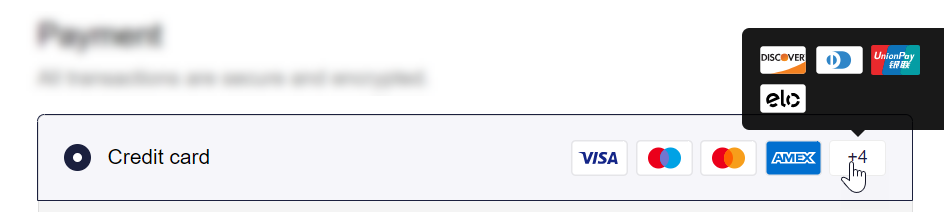
Rather than overwhelm with all payment options, Hiut shows only the 4 most popular by default
What you need to do: calculate shipping in real-time based on location, weight, and any other relevant factors.
Why: being stung by overpriced or unexpected shipping costs at the checkout is a surefire engagement killer. Calculating and showing rates in real-time adjusts user expectation as they progress through the checkout process, making it more likely they’ll complete the purchase.
Users are constantly evaluating online stores while they browse, both consciously and subconsciously. As well as a trustworthy checkout process, you need to send as many signals as possible that your site is trustworthy and credible.
This builds customer trust and makes it more likely that they’ll stick around.
What you need to do: show payment security badges, endorsements from recognised sites, and so on.
Why: each trust badge reassures prospective customers that your site is reliable and secure. Linking these to user data, payment methods and so on addresses specific concerns people might have about data security or fraudulent transactions.

A stunning example of different payment methods, from Hiut
What you need to do: ensure all costs, taxes, and shipping fees are shown before the final checkout stage.
Why: as we said in strategy #23, being stung with unexpected costs at the checkout is an engagement killer. Customers want accurate and consistent information throughout their journey, and will most likely abandon their cart to shop elsewhere if prices increase suddenly and inexplicably.
What you need to do: communicate all terms of your return policy, including timeframes and costs.
Why: knowing they can return a product if they aren’t satisfied reduces the perceived risk of making a purchase, and a clear return policy will further contribute to this.
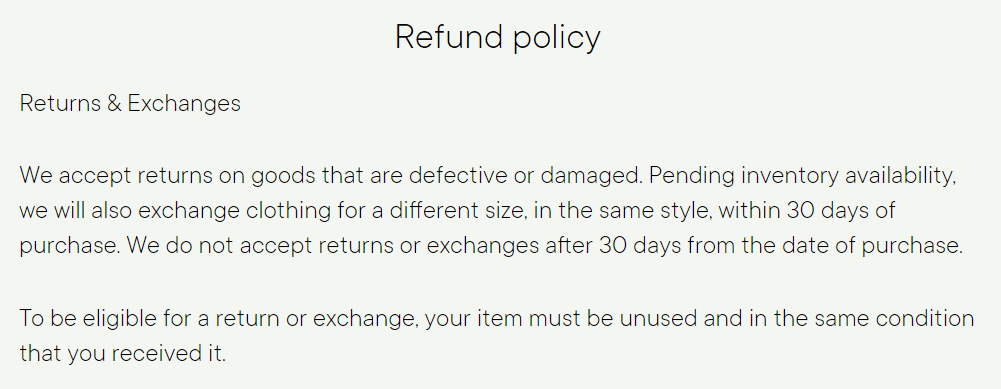
The Outrage have a simple, easy to understand policy
The policy should be clearly worded, easy to find, and you must stick to it!
What you need to do: simplify the returns process with instructions and support throughout.
Why: a policy that’s difficult to follow will harm trust, regardless of how clearly written it is. Make sure to use as few steps as possible, and be generous with timeframes and similar so that customers can realistically make use of your policy should the need arise.
What you need to do: provide multiple, easily accessible ways for prospects and customers to get in touch.
Why: one of the biggest barriers to purchase is a perceived lack of humanity or approachability. By giving people multiple ways to get in touch, you demonstrate a commitment to customer service and a willingness to assist.
What you need to do: demonstrate that other people trust and vouch for your business by showcasing customer testimonials, media mentions, social media shares and so on.
Why: it’s easy to blow your own trumpet and make claims about how trustworthy you are, but prospective customers want to know that other people trust your business too. Showcasing a range of positive feedback from outside sources is a good way to build this trust.
What you need to do: nothing – Shopify takes care of this automatically!
Why: Google and other search engines give more precedence to sites that use secure connections, especially ecommerce sites. Thankfully Shopify offers TLS by default: a secure connection that protects user data and boosts trust.
What you need to do: highlight your commitment to ethical practices.
Why: in a world where purchasing decisions are increasingly rooted in social and environmental awareness, demonstrating your commitment to sustainability, fair labour, environmentally friendly operations and similar can build trust and differentiate your brand from others.
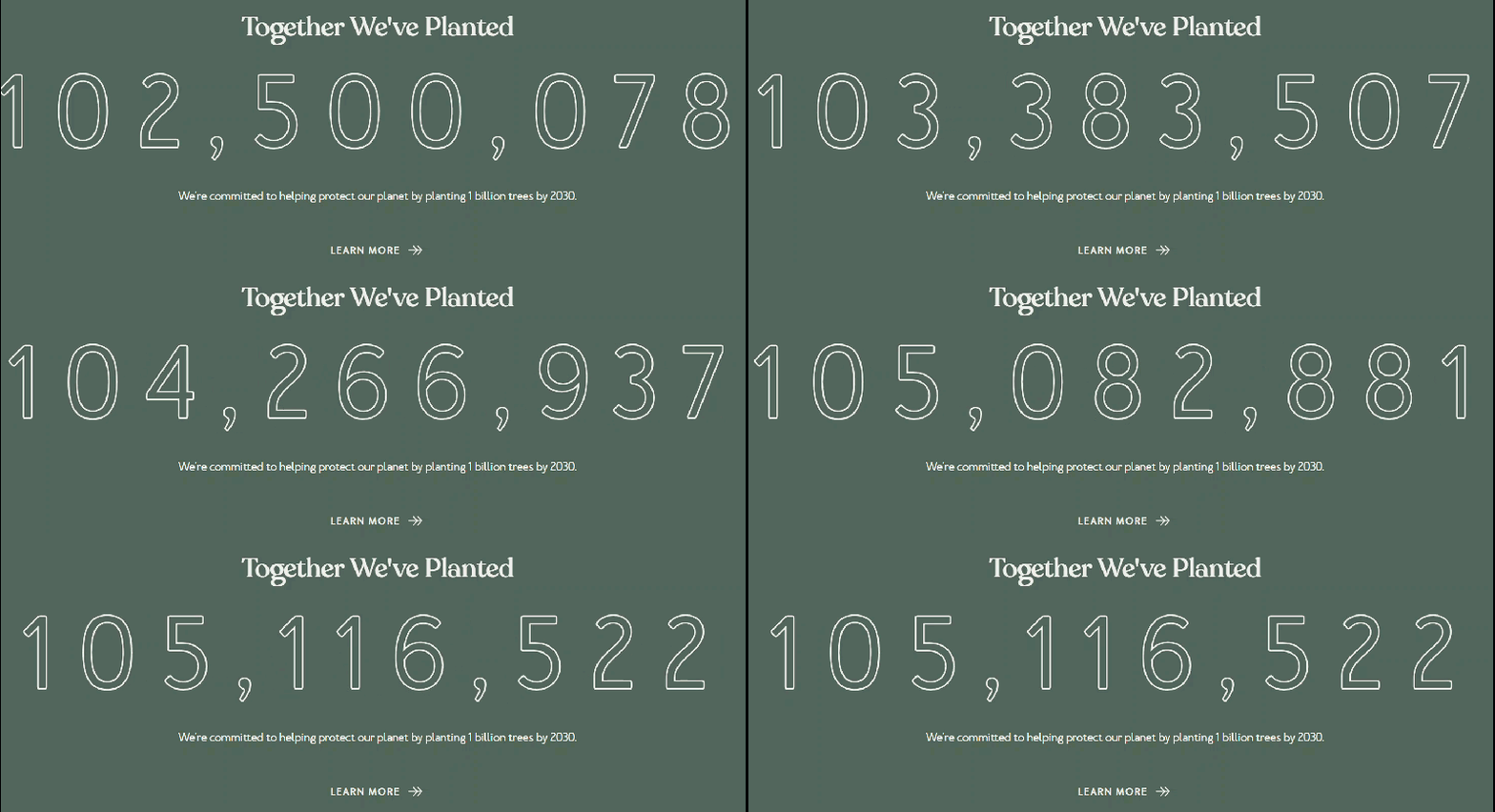
This tree counter is one of Tentree’s many ethical showcases
Convincing visitors to make a purchase is one thing. Building customer loyalty is another beast entirely, but the potential rewards are enormous: here’s how to delight your customers, reward their custom, encourage repeat custom and brand advocacy, and leverage their insights to improve the brand experience for future users.
What you need to do: give customers up to date information about the status of their order.
Why: transparent post-purchase communication builds trust in your brand and improves customer satisfaction. If you’re using a supported carrier customers can access order tracking automatically; if not, make sure the provision of tracking information is in your workflow.
What you need to do: ensure customers can easily get in touch with queries about their purchase.
Why: customers need to feel that you are still invested in their satisfaction and willing to address their queries once they’ve made a purchase.
Make it easy for them to get in touch if they’re encountering issues or have other questions: firstly through support content then through customer support channels including email, embedded contact form, live chat, phone, and WhatsApp.
What you need to do: keep in touch with customers to maintain a positive relationship and encourage repeat custom.
Why: keeping in touch shows appreciation, and demonstrates that you’re invested in your customer’s experience beyond making a purchase. By offering recommendations and incentives for future purchases you can increase the likelihood of them returning to your store. You can also invite them to leave a review or a rating, contributing their experience to the bank of trust signals in your store.
We recommend holding off on this type of outreach until you know they’re satisfied!
What you need to do: carry out surveys to gather feedback and insights about the customer experience
Why: when you’re on the inside of a business it’s hard to fully immerse yourself in the customer experience, meaning you may miss out on issues or areas for improvement. By requesting feedback from customers not only are you gaining insight into these areas; you’re further demonstrating that you value their input, further fostering brand satisfaction and loyalty.
You can cherry pick engaged users and customers to reduce the chances of alienating people, just bear in mind this may skew responses.
What you need to do: run contests or offer incentives to engage customers and encourage repeat custom
Why: building loyalty and keeping your customers coming back for more is a key part of running a successful ecommerce business, especially if you sell consumables or a wide range of products. By running contests or offering other incentives, you give people a reason to stay engaged with your brand, which is likely to translate into more sales in future.
What you need to do: reward repeat customers with loyalty programs
Why: encouraging customers to return and buy again is a big ask, and nurturing this investment in your brand makes it more likely to continue. People like to feel they are part of something, and offering loyalty rewards like free trials of new products, discounts for repeat orders, or cool freebies is a great way to express your gratitude to this invested customer base.
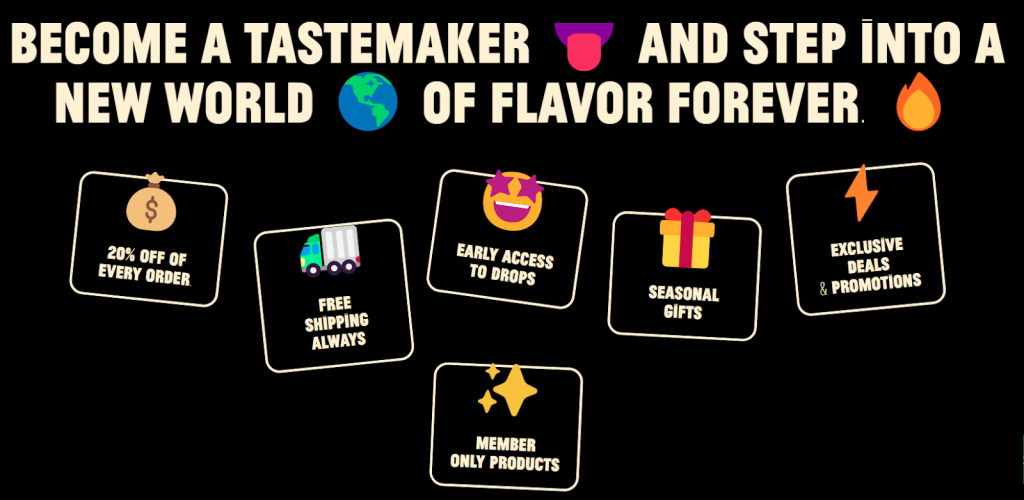
A masterclass in brand loyalty, by Fly By Jing
What you need to do: offer limited or exclusive products to foster a sense of urgency or exclusivity
Why: as your brand gains recognition and people begin to take pride in owning your products, you can leverage this with limited edition exclusives. This is a win-win: you drive more custom by creating a sense of urgency, and your customers have the opportunity to own an exclusive item.
Conversion optimisation is about minimising the friction users encounter as they navigate around your site, and nudging them towards making a purchase. There’s a fine line between minimising friction and hassling people: in this section we’ll give strategies for doing it right.
What you need to do: place prominent, eye-catching CTAs at strategic points on your pages to guide users towards desired actions
Why: as people engage with your content they will look for navigational cues to continue their journey, and if it’s not obvious where they should go they’re more likely to leave.
To stop this from happening, use CTAs effectively to guide them towards actions like learning more, signing up to your newsletter, choosing product options, or making a purchase. Effective CTAs are easily visible, clear in what they want you to do, and used with moderation.
Learn more in strategy #56.
What you need to do: show a popup with a targeted offer or incentive when a user tries to leave your site
Why: this last-minute attempt to engage with users may capture their attention and convince them to keep browsing, to sign up to a newsletter, or make some other connection with your brand that can be nurtured over time.
What you need to do: create a sense of urgency to encourage immediate action from visitors
Why: FOMO is a very powerful motivator, and you can leverage it by offering limited-time offers with countdown timers ticking down to the offer end. This nudges visitors towards making a purchase rather than spending longer weighing it up.
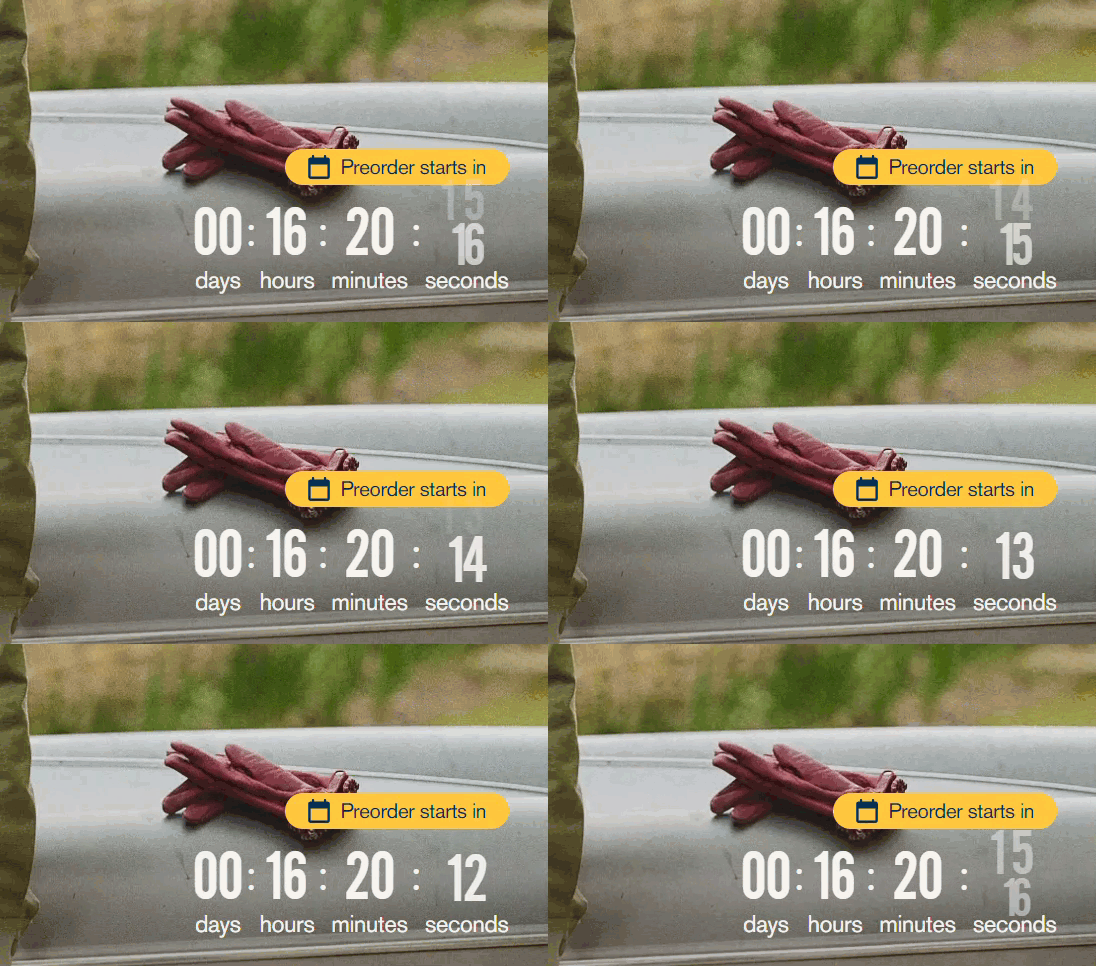
Asphalte use a proper countdown
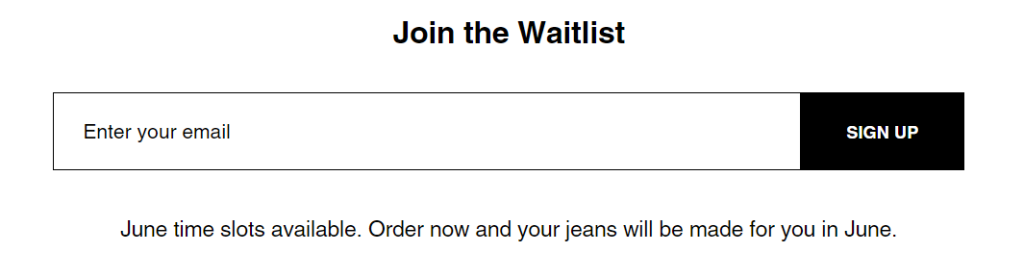
Hiut Denim offers limited slots each month. Intriguing.
Use this technique genuinely and sparingly: if your products are always on a “limited-time offer,” it will come across as a shallow marketing technique and people will see through it.
What you need to do: show visitors that people are buying from your store to encourage them to buy as well
Why: similarly to limited-time offers and countdowns, spotlighting recent purchases shows that real people are placing real orders from your store. This creates a dynamic shopping experience that visitors will want to be part of.

Adored Vintage use on-site popups to show recent orders
What you need to do: give people the option to subscribe and receive products at chosen intervals
Why: this is another excellent win-win: you get recurring revenue, the customer gets the ease and convenience of having the products they need delivered to their door on the schedule that suits them.
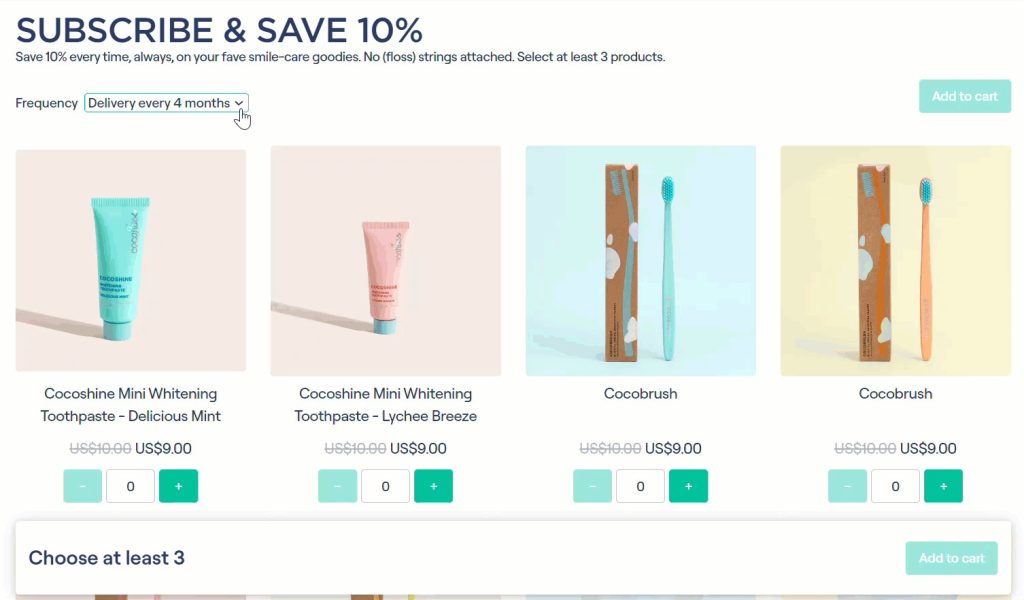
Cocofloss showing us how it’s done
Further increase the appeal of subscriptions by offering a subscribe & save discount.
What you need to do: tell people when out of stock products are back in stock, or when you launch new products
Why: once you’ve piqued someone’s interest you need to do whatever you can to keep them engaged with your brand. Telling people about new or back-in-stock products that align with their interest keeps them informed and engaged, and encourages them to come back for another look.
If you used strategy #17 (persistent wishlists) you can give people information that relates directly to the product(s) they’re interested in.
What you need to do: give visibility to users about their progress through parts of their journey
Why: we mentioned earlier that people browsing websites have short attention spans and will leave your site if they can’t find what they need quickly: the same applies if they feel bogged down by a long, drawn out process.
You can preempt this by showing progress through multi-step parts of their journey – checkouts for example. You can also use progress bars in more creative ways, like showing progress towards unlocking a discount 👇

The visual cue reduces anxiety and uncertainty, improves user experience, and lowers abandonment rates.
What you need to do: conduct tests as you make changes to see which elements are most effective
Why: with so many ways to tweak and refine your store experience, you need some way of measuring effectiveness. A/B testing lets you evaluate performance for key metrics (i.e. conversion rate) against a control: by showing one set of users one asset and another set a variant, you can see which performs best.
Running an effective Shopify store requires you to experiment constantly and refine things based on what you learn. Read Shopify’s in-depth write-up about A/B testing here.
No one should be held back from using your store because of their needs or their location. These strategies will help you commit to inclusivity, and cater to as diverse an audience as possible.
Read more about web accessibility here, and on making your Shopify store accessible here.
What you need to do: provide support for multiple languages to cater to an international audience
Why: the more users can access and engage with your website, the bigger your bank of potential customers. Offering multilingual web content promotes accessibility and lets users engage in the language they’re most comfortable with.
As this Shopify resource states you can either create translations automatically with an app or import your own translations manually.
What you need to do: adapt the content of your site so that references make sense to users from various locations
Why: translating content is just one piece of the multi-lingual puzzle: localisation is another crucial piece that retains your brand’s distinctive voice across different languages, while making sure any culture-specific references are maintained.
What you need to do: show users information relevant to their location to streamline their journey
Why: if you have physical locations your customers will want information about their nearest stores. If you’re an online store with customers in multiple regions they’ll likely be eligible for different offers and promotions, subject to different currencies and shipping policies (US customers don’t need to read about the impact of Brexit on EU deliveries, for example) and so on.
Serving geo-targeted content connects users only with information that’s relevant to them, reducing overwhelm and increasing the likelihood they’ll stick around.
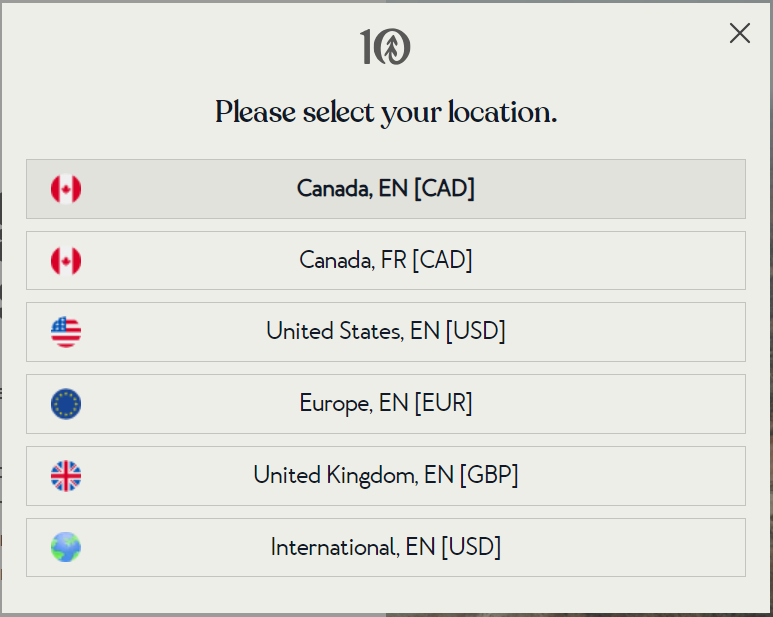
Tentree offer a range of regions to visitors
What you need to do: use fonts that are easy to read for users with visual impairments or reading difficulties
Why: maximising readability for all users, including those with accessibility needs or using assistive technologies, means that more potential customers can engage with your site. It’s also a way to champion accessibility on the internet and in general.
What you need to do: try to ensure users can navigate your site with keyboard-only navigation
Why: some users rely on keyboard controls due to mobility needs, and this strategy lets them smoothly and effectively navigate your site.

A Level Access logo on the Fly By Jing site advertising their commitment to accessibility
Shopify offers some good guidance on keyboard support.
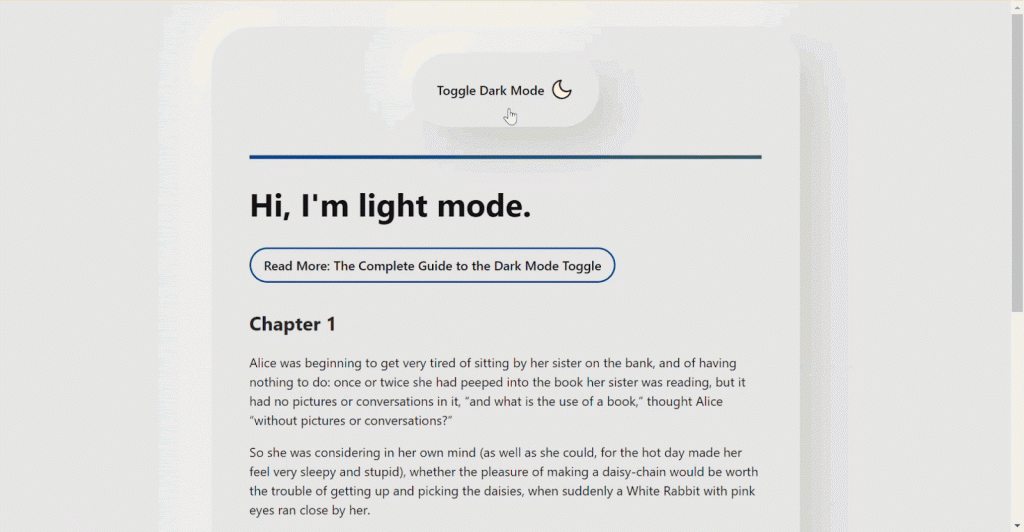
What you need to do: let users switch between regular and high contrast
Why: users with visual impairments may struggle to read regular text, and offering a high contrast colour scheme contributes to your site’s accessibility.
What you need to do: let users resize text on your site
Why: this also caters to users whose visual impairments or other accessibility needs make it difficult for them to engage with default font sizes.
Your Shopify store is just one part of your business, and connecting the different parts together increases the efficiency and effectiveness of your marketing.
These strategies let you collect and leverage data from visitors and customers to drive more traffic, more conversions, and more repeat custom.
What you need to do: invite people to sign up for email updates
Why: not every visitor is ready to buy right away, and that’s fine. Getting them on board and nurturing them with ongoing communication is a good way to keep them in the loop and guide them toward making a purchase in future.
Email marketing can be incredibly effective, but it can also be very annoying. If you do decide to use it, make sure the emails are high quality, highly relevant, and useful.
What you need to do: foster an active feeling of community by showcasing your social media
Why: the most successful Shopify stores tap into a sense of community and make people feel like they’re part of something. There’s no better way to do this than integrating your active social media channels into your site: include links to your profiles on different platforms, showcase recent posts with feeds, invite users and customers to contribute, ideally even showcasing their content as a trust signal.
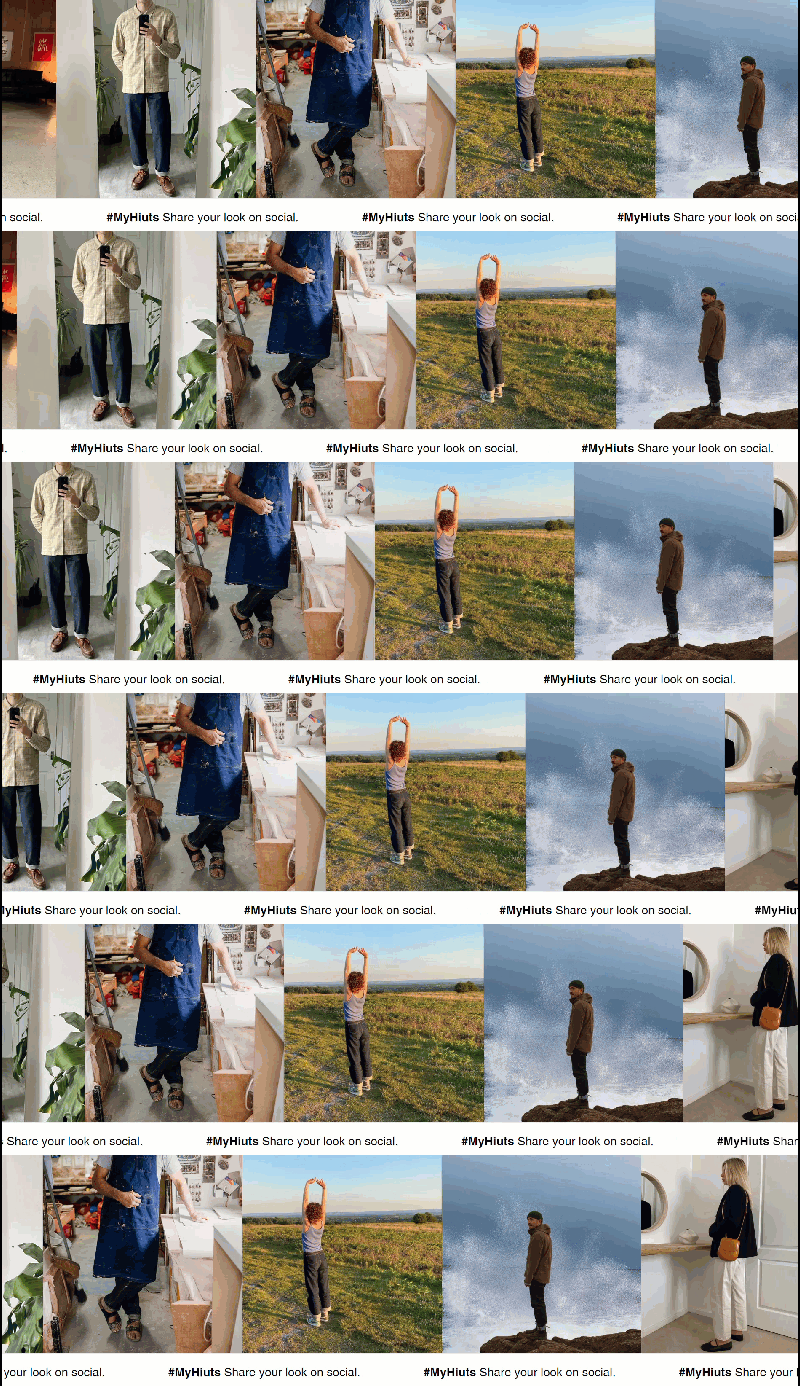
This scrolling gallery of customers showing off their Hiuts purchase via a hashtag is incredibly eye-catching
What you need to do: nurture users towards specific outcomes with curated CTAs and content
Why: in strategy #39 we mentioned the importance of CTAs in guiding visitors towards specific on-page actions. You can bolster that strategy by building email workflows around specific outcomes: for example, dripfeeding information about your products to people who’ve signed up to your newsletter, or re-engaging with existing customers to check whether they’re satisfied with their purchase.
What you need to do: collect and analyse data on user engagement to further strengthen your site
Why: the behaviour of visitors coming and going from your website can be incredibly insightful, but to tap into the insights you need to collect the data. By using analytics software to explore how visitors find your site, what they do when they get there, what roadblocks they encounter, and why they leave, you can craft a more strategic path forward.
Shopify comes with built in analytics. You can also connect the platform to Google Analytics 4.
What you need to do: align your site with SEO best practice and commit to an onward SEO strategy
Why: a huge chunk of people buying online use search engines to find stores. And SEO is one of the biggest factors determining which websites they see when they make a search. Here, for example:
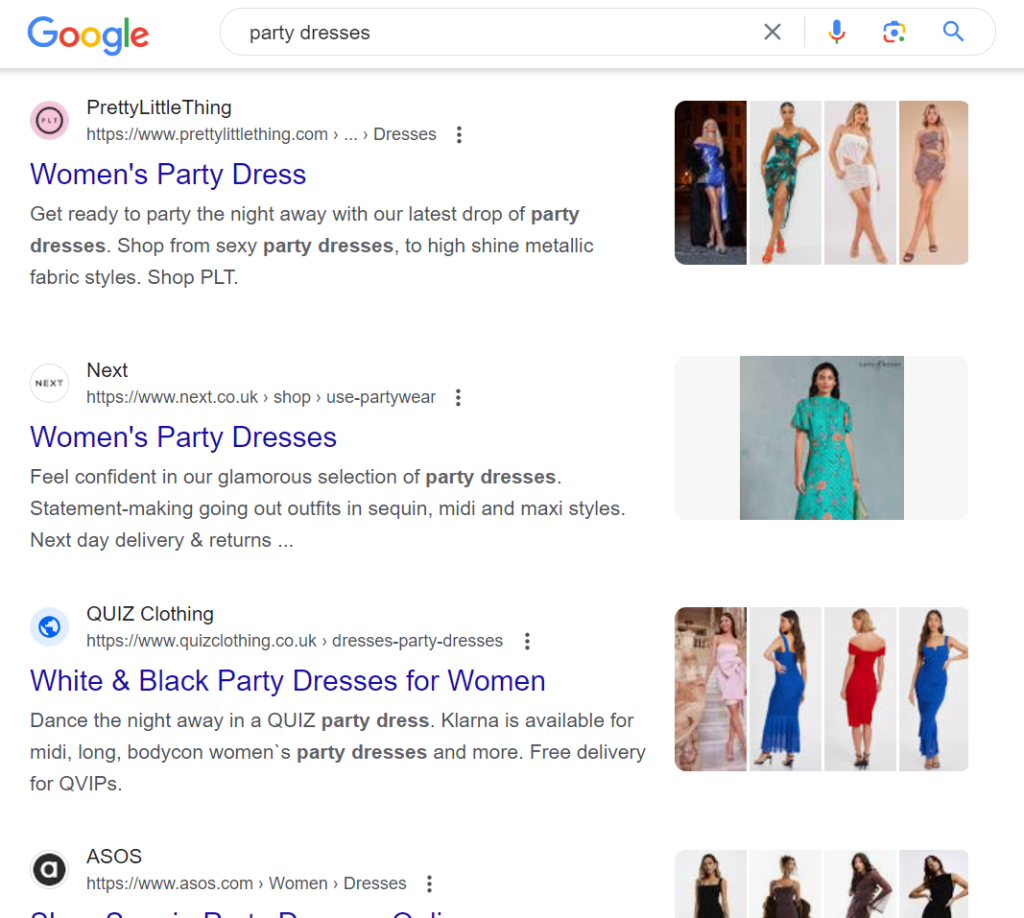
Google results for ‘party dresses’
Industry analysis shows that nearly 30% of people will click the top link. 16% will click the second. Then 11%, then 8% before dropping off exponentially quickly.
This means that unless your site ranks well for terms related to your product offering, you’ll struggle to bring in search traffic. And while there are other ways to bring people to your site (social media, ads, word of mouth etc), search is an important piece of the puzzle.
⚙️️ Ecommerce SEO is a complex beast but there are lots of ways to optimise your site:
These tips will help you to succeed, but strategic ecommerce SEO will transform your website. Here’s what to do next:

Actionable strategies to turn visitors into customers and blow your competitors out of the water. ...
What Oxfordshire businesses want in 2026, and how it compares to the hype
TL;DR probably not